
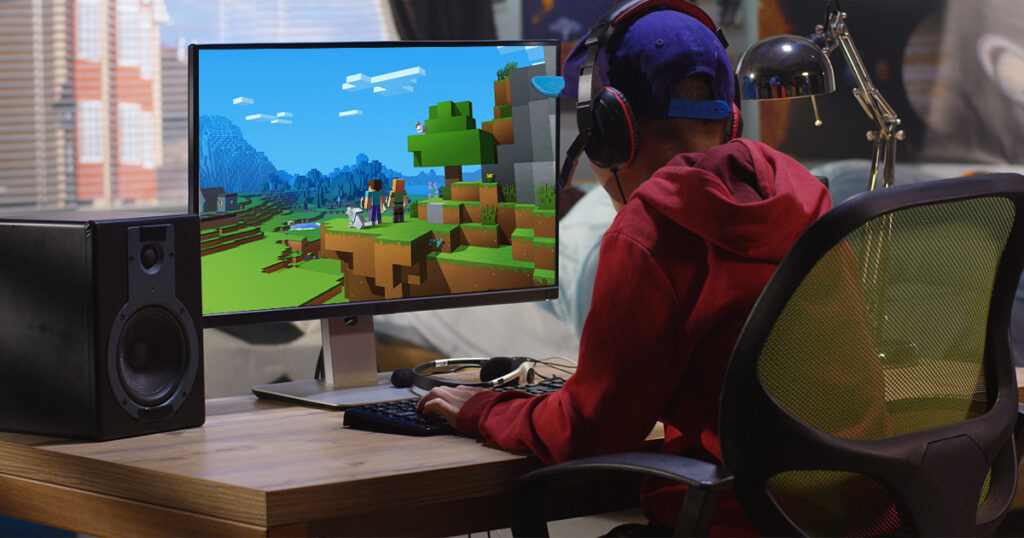
In today’s digital-first world, it’s no surprise that kids and teens are spending more of their social and entertainment time online. For many families, gaming has become a primary way young people connect with friends, express creativity, and unwind after a long day. And with home internet being able to handle the data demands of games, streaming TV, work and more, all at the same time, games aren’t easily monitored on the living-room TV like they once were.
Most parents have likely heard of games like Fortnite, Roblox, Minecraft, and Among Us. However, understanding what these games actually involve—and whether they’re age-appropriate—can be less clear. Below is a simple, parent-friendly overview of four of the most popular online games among tweens and teens today, along with key considerations for safety and suitability.
Fortnite
What it is: A fast-paced, free-to-play battle royale game
In Fortnite’s most popular mode, Battle Royale, up to 100 players compete to be the last one standing on a colorful island. Players start with minimal equipment and must gather weapons, resources, and supplies while avoiding or confronting other players.
What parents should know:
- Gameplay involves cartoon-style combat with a variety of weapons
- Built-in voice and text chat can expose players to strangers
- Includes in-game purchases (skins, upgrades, etc.)
Age guidance: Common Sense Media recommends ages 13+ due to violence and online interaction features.
Roblox
What it is: A massive online platform featuring user-created games
Rather than being a single game, Roblox hosts millions of games created by users. These range from role-playing experiences to obstacle courses and simulation games like running a restaurant or attending virtual school.
What parents should know:
- Content varies widely in quality and appropriateness
- Strong social component, including chat and messaging
- Encourages creativity and game design skills
Age guidance: Common Sense Media suggests 13+, and strongly recommends enabling parental controls and limiting chat for younger players.
Minecraft
What it is: A sandbox game focused on creativity and exploration
Minecraft allows players to build, explore, and survive in a block-based 3D world. Kids can gather materials, construct elaborate structures, and interact with other players depending on the game mode.
What parents should know:
- Encourages problem-solving, creativity, and collaboration
- Different modes (Creative vs. Survival) offer varying levels of challenge and intensity
- Multiplayer servers may include chat features
Age guidance: Generally appropriate for ages 8+, with high marks for educational value and creativity.
Among Us
What it is: A social deduction party game
In Among Us, players take on the role of Crewmates or Impostors aboard a spaceship. Crewmates complete tasks while trying to identify the Impostors, who attempt to sabotage the mission without being caught.
What parents should know:
- Focuses on teamwork, communication, and critical thinking
- Includes cartoon-style “elimination” scenes (brief but may concern some younger players)
- Often played with friends, but can also include strangers in online matches
Age guidance: Common Sense Media suggests 10+, noting mild violence and social interaction elements.
Helping Parents Stay in Control
With so much time spent online, many parents are looking for ways to better manage screen time and ensure safe gaming experiences. Tools like parental controls and network management services can help families stay informed and set healthy boundaries.
For example, services like FTC’s Premium Wi-Fi with ExperienceIQ Enhanced Parental Controls allow parents to:
- Set time limits for internet use
- Manage device access by user profiles
- Filter inappropriate content
- Monitor usage trends daily, weekly, or monthly
Final Thoughts
Online games can be a fun, creative, and social outlet for kids—but like any digital activity, they work best with the right balance and supervision. By understanding what these games involve and using available tools, parents can help ensure a safe and positive experience for their children.
Looking for a way to take more control of your kids’ on-screen time? When parents subscribe to FTC’s Premium Wi-Fi, they can gain a range of added controls with the associated ExperienceIQ Enhanced Parental Controls offering. Among its many benefits, ExperienceIQ can help parents manage the usage hours for connected devices in the home, set up profiles for limiting certain internet access, configure time limits for each profile, set up content filters and get usage reporting by day, week and month. Visit ftc.net to learn more!